1
Start with your main goal
Before choosing an energy upgrade, clarify what you are trying to achieve.
- Am I mainly trying to reduce electricity bills?
- Am I trying to use more renewable energy at home?
- Am I planning for an electric vehicle?
- Am I trying to reduce gas use?
- Am I interested in backup power during outages?
- Am I replacing old equipment, such as hot water or heating?
- Am I simply trying to understand my options before requesting quotes?
Why this matters: different goals can lead to different priorities, so the best first step is not the same for every home.
2
Understand your current home energy setup
Your best next step depends on what you already have.
- Do I already have solar or a battery?
- Do I have gas hot water, electric hot water, or heat-pump hot water?
- Do I use gas cooking or gas heating?
- Do I own or plan to buy an electric vehicle?
- Do I have single-phase or three-phase power?
- Is my switchboard modern enough for future upgrades?
- Do I know my typical electricity usage pattern?
A staged energy plan should start from your current setup, not a generic upgrade order.
Need help choosing the next step?
Use the checker to see whether solar review, battery education, more research, or staged planning is the cautious next move.
Run the readiness check
3
Review your electricity usage pattern
Before prioritising upgrades, understand when and how you use energy.
- Do I use more electricity during the day or at night?
- Is anyone usually home during the day?
- Do I work from home?
- Do I use air conditioning often?
- Do I have a pool pump or electric hot water?
- Do I already have high evening usage?
- Am I expecting usage to increase because of an EV, heat pump, or appliance changes?
Solar, battery storage, EV charging, and heat-pump hot water all interact with your usage pattern.
4
If you do not have solar yet, consider solar first
For many homeowners, solar is the first upgrade to investigate.
- You own your home and have suitable roof space.
- Your roof has limited shading.
- Your electricity bills are medium to high.
- You use some electricity during the day.
- You are planning future upgrades such as battery storage, EV charging, or heat-pump hot water.
- You can ask providers to explain system size, product details, export limits, and assumptions.
Solar should not be treated as automatically suitable for every home. Roof condition, shading, usage, tariffs, export settings, budget, and product choice all matter.
5
If you already have solar, review battery readiness
Battery storage may be worth researching after solar is installed or clearly planned.
- Do I already have solar?
- Do I export a lot of unused solar during the day?
- Do I use significant electricity in the evening or overnight?
- Do I want to understand backup power options?
- Am I on or considering time-of-use tariffs?
- What assumptions are used in any savings or payback estimate?
Battery storage is not automatically the next step for every solar household.
6
Plan EV charging around your home and driving habits
An EV charger may become relevant if you own or plan to own an electric vehicle.
- Where will the vehicle be parked?
- Is there safe and practical access to power?
- Do I need a dedicated EV charger or is a standard power point enough for now?
- Will I charge mostly during the day, overnight, or both?
- Could solar help support daytime charging?
- Will my switchboard or electrical supply need assessment?
- Do I need load management or smart charging features?
Home EV charging should be planned safely with qualified installer advice.
7
Consider heat-pump hot water when replacing old systems
Heat-pump hot water may be worth researching when your existing hot water system is old, expensive to run, or due for replacement.
- What type of hot water system do I currently have?
- Is it due for replacement soon?
- Where would a heat-pump unit be installed?
- Are there noise, space, ventilation, or location considerations?
- Can it be timed to run during solar generation periods?
- Are there current incentives or requirements I need to verify?
- Who confirms whether it is suitable for my home?
Suitability depends on usage, location, climate, product choice, plumbing, electrical work, and current programs.
Build the plan before comparing products
A staged readiness summary can help you avoid rushing into a product path before the home, usage, and timing questions are clearer.
Start the two-minute check
8
Think about gas-to-electric planning
Some homeowners may want to reduce or eventually remove gas use.
- Gas hot water
- Gas cooking
- Gas heating
- Space heating and cooling
- Future induction cooking
- Future heat-pump hot water
- Switchboard and electrical capacity
- Solar and battery readiness
Electrification planning should be staged carefully. Replacing multiple appliances at once may not be practical or affordable for every household.
9
Check whether your switchboard may need assessment
Many home energy upgrades depend on electrical capacity and safe installation.
- Is my switchboard suitable for the upgrade?
- Is my home single-phase or three-phase?
- Will additional circuits be required?
- Are safety switches or other upgrades needed?
- Are there network or connection requirements?
- Could future upgrades be planned at the same time?
Do not assume every home is immediately ready for every upgrade. Electrical suitability should be confirmed by qualified providers.
10
Prioritise upgrades by timing and urgency
Some upgrades are optional, while others may be triggered by replacement timing.
- Is my current hot water system failing?
- Is my electricity bill rising?
- Am I buying an EV soon?
- Is my roof due for repair before solar?
- Am I renovating?
- Am I planning to stay in the home long term?
- Do I need backup power soon?
- Do I want to stage upgrades over time?
There is no single correct order for every home. The best order depends on your circumstances.
11
Be cautious with savings and payback claims
Energy upgrade decisions often involve assumptions.
- What assumptions are used in the savings estimate?
- What tariff is assumed?
- What feed-in tariff is assumed?
- What usage pattern is assumed?
- Are future energy price changes assumed?
- Are rebate or incentive assumptions included?
- What happens if my usage, programs, or tariffs change?
Red flag: be cautious if any upgrade is sold mainly on a simple payback number without clear assumptions.
12
Check rebates, incentives, and eligibility carefully
Rebates and incentives can change and may depend on eligibility.
- Is any rebate or incentive included in the quote?
- Who confirms eligibility?
- Is the rebate applied upfront or claimed separately?
- What happens if I am not eligible?
- Are there product, installer, location, or household requirements?
- Are there deadlines or funding limits?
- Can the provider show current source information?
Do not assume you qualify for a rebate or incentive until your eligibility is properly confirmed.
13
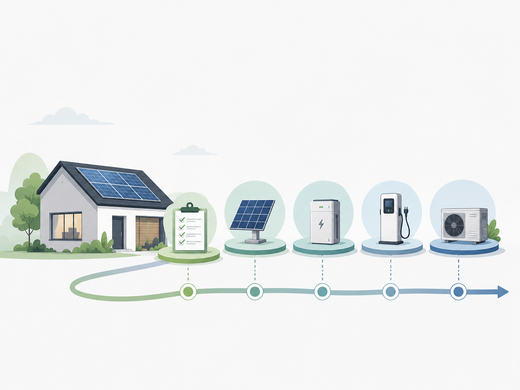
Build a staged upgrade plan
Instead of trying to do everything at once, consider a staged plan.
- Understand your usage and bills.
- Check roof, switchboard, and site suitability.
- Research solar if you do not already have it.
- Review battery readiness if you already have solar.
- Plan EV charging if you own or expect to own an EV.
- Review heat-pump hot water when your hot water system is due for replacement.
- Reassess your plan as tariffs, usage, technology, and incentives change.
A staged plan can help you avoid rushed decisions, overbuying, or installing products that do not work well together.
14
Compare providers carefully
Whether you are considering solar, battery storage, EV charging, or heat-pump hot water, compare providers carefully.
- Clear product details
- Clear installation inclusions
- Written warranty information
- Explanation of assumptions
- Site-specific advice
- Transparent pricing and clear exclusions
- After-sales support
- No pressure to sign immediately
Red flag: be cautious if a provider gives strong claims without explaining your home, usage, product suitability, installation requirements, and assumptions.
15
Final questions before choosing your next upgrade
- What is my main goal?
- What problem am I trying to solve first?
- What do I already have?
- What is due for replacement soon?
- What is my current electricity usage pattern?
- Am I planning an EV or other future upgrades?
- Is my home technically ready?
- Have I compared more than one option?
- Have I checked assumptions behind savings or payback claims?
- Am I being given enough time to make a considered decision?
Simple priority guide
- If you do not have solar yet, start by researching solar suitability.
- If you already have solar, review how much solar you use and export.
- If you are planning an EV, check parking, charging needs, electrical capacity, and solar timing.
- If your hot water system is old or gas-based, research heat-pump options when replacement timing makes sense.
- If you are unsure, start with education and avoid rushed decisions.
- Use the readiness checker to identify the most sensible next step.
Summary
A good home energy upgrade plan should consider your current
setup, usage pattern, home suitability, future needs, budget,
tariffs, product options, incentives, and installation
requirements.
For many homeowners, solar is the first upgrade to investigate.
Battery storage, EV charging, heat-pump hot water, and broader
electrification can then be considered as part of a staged plan.
Energy Upgrade Finder AU may provide referral links or partner
pathways where available. Some links may generate a commission for
Energy Upgrade Finder AU, with no extra cost to you. This does not
guarantee savings, rebate eligibility, payback, installer
availability, backup performance, or product suitability.